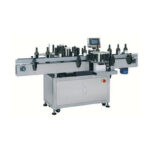
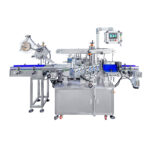
A steam shrink tunnel is an essential piece of equipment in modern shrink sleeve labeling lines. It uses controlled steam heat to shrink thermoplastic film tightly around bottles, containers, caps, and other packaged products. This technology is widely used in the beverage, food, pharmaceutical, cosmetic, and household chemical industries.
Compared with conventional hot air shrink tunnels, steam shrink tunnels offer excellent heat distribution and are particularly suitable for full-body shrink sleeves, irregularly shaped bottles, and applications that require a smooth, professional label finish.
In this article, we explain how a steam shrink tunnel works, its main components, its advantages, and the key factors to consider when selecting a suitable machine.
1. What Is a Steam Shrink Tunnel?
A steam shrink tunnel is a heating system designed to shrink sleeve labels after they have been placed over a container. The machine uses steam distributed through specially positioned nozzles to heat the shrink film evenly as containers move through the tunnel on a conveyor.
Shrink sleeve labels are commonly made from materials such as PVC, PETG, and other heat-shrinkable films. These materials are manufactured with a molecular orientation that allows them to contract when heated to the appropriate temperature.
As the film shrinks, it conforms to the shape of the container, creating a tight fit around the bottle body, shoulder, neck, or cap.
Steam shrink tunnels are commonly integrated with automatic sleeve labeling machines, filling lines, capping machines, and downstream packaging equipment.
2. How Does a Steam Shrink Tunnel Work?
The steam shrink process generally consists of five main steps.
Step 1: Applying the Shrink Sleeve
First, a shrink sleeve labeling machine places a pre-printed tubular film over the bottle or container. The sleeve is positioned at the required height but remains loose before entering the shrink tunnel.
Depending on the application, the sleeve may cover the entire bottle, part of the bottle body, the neck, or the cap for tamper-evident packaging.
Step 2: Generating and Supplying Steam
A steam generator heats water to produce steam, which is delivered to the shrink tunnel through a pipe system.
The steam supply must provide sufficient capacity and stable operating conditions to match the production speed and the shrink film specifications.
Steam pressure, flow rate, temperature, and distribution should be adjusted according to the machine design and packaging requirements.
Step 3: Heating the Film Through Steam Nozzles
As bottles travel through the tunnel, strategically positioned steam nozzles direct steam toward different areas of the containers.
The nozzles can be arranged to provide targeted heating around the bottle body, shoulders, neck, and cap. Proper nozzle positioning helps ensure that the film receives sufficient heat without excessive heating in particular areas.
This is especially important for containers with complex contours, recessed areas, or irregular shapes.
Step 4: Shrinking the Film Around the Container
When the shrink film reaches its specified shrink temperature, it begins to contract according to its material properties and shrink orientation.
The film gradually conforms to the container surface, producing a tight, smooth sleeve with minimal wrinkles or distortion when the process is properly adjusted.
The shrink result depends on several factors, including steam distribution, conveyor speed, film thickness, shrink characteristics, sleeve positioning, and container geometry.
Step 5: Cooling and Finalizing the Package
After leaving the steam tunnel, the containers cool and the shrink sleeves stabilize around their surfaces.
Depending on the application, additional cooling, air blowing, or drying equipment may be installed to remove surface moisture before downstream operations such as inkjet coding, inspection, cartoning, or case packing.
3. Why Does Steam Make Shrink Film Contract?
Heat shrink film is manufactured through a process that orients its polymer molecules. When the film is subsequently heated to the appropriate temperature, the molecular structure can relax toward a less oriented state, causing the film to contract.
Steam provides the heat required to activate this shrinkage.
The process does not rely on steam pressure mechanically pressing the film against the bottle. Instead, controlled heat causes the film to shrink, while the container shape determines its final fit.
Steam offers several practical advantages:
- Uniform heat distribution: Steam can reach multiple areas of a container when the nozzle system is properly designed.
- Excellent contour conformity: Suitable film and nozzle configurations can produce good results on bottles with curved shoulders, narrow necks, and irregular profiles.
- Suitable for full-body sleeves: Steam shrink tunnels are widely used for full-body labeling and tamper-evident cap sleeves.
- Controlled heating: Adjustable steam zones help operators manage shrinkage in different parts of the container.
The actual performance depends on the shrink film, bottle material, tunnel design, and process settings.
4. Steam Shrink Tunnel vs. Hot Air Shrink Tunnel
Both steam and hot air shrink tunnels use heat to activate film shrinkage, but their heating methods and equipment requirements differ.
| Feature | Steam Shrink Tunnel | Hot Air Shrink Tunnel |
|---|---|---|
| Heating medium | Steam | Heated air |
| Heat distribution | Steam delivered through dedicated nozzles | Hot air circulated or directed through ducts and nozzles |
| Typical applications | Full-body sleeves, complex bottle shapes, cap sleeves | Partial or full-body sleeves, depending on film and equipment design |
| Main equipment | Steam generator, piping, valves, nozzles, drainage system | Heating elements or heat source, fans, ducts, temperature controls |
| Moisture management | Condensation and drainage must be controlled | Generally does not introduce steam condensation |
| Process adjustment | Steam supply, nozzle position, conveyor speed | Air temperature, airflow, nozzle position, conveyor speed |
A steam shrink tunnel is often a strong choice for applications requiring uniform heating around complex container shapes. A hot air tunnel may be preferable when a simpler installation or a dry heating process is a priority.
The best choice depends on the film specifications, bottle design, production speed, and required packaging quality.
5. Main Components of a Steam Shrink Tunnel
A typical industrial steam shrink tunnel consists of the following components:
Steam generator: Produces the steam required for the shrinking process. Its capacity should match the tunnel's steam consumption and production requirements.
Steam distribution system: Pipes, valves, regulators, and related components deliver steam to the heating zones.
Adjustable steam nozzles: Direct steam toward specific areas of each container. Nozzle position and steam distribution are critical to achieving consistent shrinkage.
Insulated tunnel chamber: Encloses the heating area and helps maintain stable operating conditions.
Conveyor system: Moves containers through the tunnel at a controlled speed to provide the required heating time.
Control system: Allows operators to adjust and monitor relevant process parameters, such as conveyor speed and steam supply, depending on the machine configuration.
Drainage system: Removes condensate and helps prevent excessive water accumulation inside the tunnel.
Depending on the product and production line, the system may also include cooling fans, air knives, or drying equipment after the tunnel.
6. Applications of Steam Shrink Tunnels
Steam shrink tunnels are widely used across industries that require attractive, secure, and closely fitted shrink sleeve packaging.
Beverage Industry
Bottled water, juice, tea, energy drinks, and other beverages frequently use full-body shrink sleeves or cap sleeves. Steam heating can help the film conform to different bottle profiles.
Food Industry
Sauce bottles, condiment containers, and other packaged food products can use shrink sleeves for branding, product identification, and tamper-evident packaging.
Cosmetics and Personal Care
Shampoo, shower gel, lotion, and other personal care products often come in curved or uniquely shaped bottles. A properly configured steam shrink tunnel can help produce a smooth sleeve finish.
Household Chemicals
Detergent, cleaning solution, and other household chemical containers may use shrink sleeves for product decoration and identification. Bottle material compatibility and heat resistance should be evaluated before selecting the process.
Pharmaceutical and Healthcare Products
Tamper-evident shrink bands are commonly used around caps and closures. The heating process must be suitable for the packaging materials and the product's quality requirements.
7. How to Choose the Right Steam Shrink Tunnel
Selecting the right equipment requires more than choosing a tunnel based on its external dimensions. The following factors should be evaluated before purchasing a machine.
1. Bottle shape and dimensions
Confirm the bottle height, diameter, shoulder profile, neck dimensions, and material. These details determine the tunnel opening, conveyor arrangement, and steam nozzle configuration.
2. Shrink film material
Identify the film type, thickness, shrink ratio, and recommended shrink temperature. PVC and PETG films may require different process settings, and film supplier recommendations should be followed.
3. Label coverage
A cap sleeve, partial-body sleeve, and full-body sleeve have different heating requirements. The steam nozzles should be configured for the actual shrink area.
4. Required production speed
Specify the target output in bottles per minute or bottles per hour. Conveyor speed and effective heating length must provide sufficient exposure time at the required output.
5. Steam supply and consumption
Confirm the required steam pressure, steam consumption, generator capacity, and site utilities with the equipment manufacturer. Requirements vary with bottle geometry, film, output, and machine design.
6. Bottle heat resistance
Plastic bottles can soften or deform if exposed to excessive heat. The machine should be tested using the actual containers, especially when processing thin-walled PET or other heat-sensitive packaging.
7. Moisture removal
Steam creates condensation. Evaluate whether drainage, cooling, or drying equipment is needed before printing, inspection, secondary packaging, or case packing.
8. Production line integration
Check the conveyor height, bottle spacing, upstream sleeve labeling machine, downstream equipment, electrical supply, and available installation space.
Before confirming the final machine configuration, a packaging trial using the actual bottles and shrink film is strongly recommended.
8. Common Problems and Troubleshooting
Even a well-designed steam shrink tunnel may require process adjustments when the film, bottle, or production conditions change.
Wrinkled shrink sleeves: Check sleeve positioning, steam distribution, conveyor speed, and whether the film is suitable for the bottle geometry.
Uneven shrinkage: Inspect nozzle alignment, steam flow, heating zones, and the distribution of heat around the container.
Bottle deformation: Reduce excessive heat exposure and verify the bottle's heat resistance, conveyor speed, and steam settings.
Water droplets on bottles: Check condensate drainage and consider suitable air-blowing or drying equipment after shrinking.
Loose sleeves or incomplete shrinking: Confirm that the film has the correct shrink characteristics and that sufficient heat reaches all required areas.
Distorted printed graphics: Review film orientation, shrink ratio, sleeve dimensions, and the suitability of the artwork for the container shape.
Troubleshooting should be based on actual production trials rather than simply increasing steam pressure or temperature, since excessive heat can create additional problems.
Conclusion
A steam shrink tunnel uses controlled steam heating to activate the shrink properties of sleeve film, allowing it to conform closely to bottles, containers, caps, and other packaging shapes.
Its key advantages include effective heat distribution, suitability for complex container profiles, and the ability to produce high-quality full-body shrink sleeves. Successful operation depends on matching the steam system, nozzle arrangement, conveyor speed, film specifications, and container material.
For manufacturers planning an automatic shrink sleeve packaging line, evaluating actual bottles and film samples is an important step toward selecting the right equipment and achieving consistent packaging quality.
VKPAK provides packaging machinery solutions for filling, capping, labeling, and shrink sleeve applications. Contact our team with your bottle dimensions, shrink film specifications, and target production speed to discuss a suitable packaging line configuration.